This video and the material shared here come from Erik Dalton’s Technique Tour home-study course.
Introduction
Consider a client who reports lingering shoulder discomfort after falling directly onto the point of the shoulder several years ago. The acute injury resolved, but the shoulder has never moved quite the same. Overhead elevation feels restricted near end range. Cross-body movements are uncomfortable. And the client points to the upper trapezius feeling tight and tender.
Every time a client reaches overhead, throws a ball, pushes open a door, or reaches across the body, the AC joint is a player in shoulder mechanics.
Healthy AC Joint Mechanics
The AC joint is the articulation between the lateral end of the clavicle and the acromion of the scapula. A small planar synovial joint, it joins the sternoclavicular joint in forming the bony connection between the upper extremity and axial skeleton. Although movement here is relatively small, the AC joint allows the scapula to change its position relative to the clavicle as the arm moves. So, restriction here can alter scapular mechanics and force neighboring structures to compensate.
During arm elevation, the scapula must upwardly rotate so the glenoid turns superiorly. At the same time, the superior portion of the scapula tips posteriorly relative to the thorax. The acromion moves posteriorly and superiorly while the inferior angle moves closer to the thorax.
For these movements to occur efficiently, the scapula and clavicle must move together as a coordinated unit. At the SC joint, the clavicle elevates, retracts, and posteriorly rotates, while movement at the AC joint allows the scapula to upwardly rotate and posteriorly tilt relative to the clavicle. Restriction at either joint can alter this coordinated motion and shift movement and load to other parts of the shoulder complex. Watch the video courtesy of anatomy.app to see healthy mechanics in action.
Dysfunctional AC Joint Mechanics
AC joint problems commonly follow trauma. A fall directly onto the lateral shoulder or a collision during contact sports can drive the acromion inferiorly relative to the clavicle. Milder injuries sprain the AC ligaments. Greater force also tears the coracoclavicular ligaments, allowing the clavicle to ride visibly high as the scapula drops away (an AC separation).
Previous trauma may leave residual stiffness, protective guarding, or changes in how the client uses the shoulder long after the initial injury has healed.
Degenerative Changes
The AC joint is also particularly susceptible to degenerative change because its small articular surfaces repeatedly transmit significant forces generated during upper-extremity loading. Age or years of heavy lifting, repetitive overhead work, throwing, contact sports, or weight training expose the joint to repeated compression and shear. Over time, these loads may contribute to cartilage degeneration, joint-space narrowing, osteophyte formation, and changes in AC joint mobility.
Posture and Compensation
Long-standing postural and movement adaptations can influence AC mechanics in another way. Increased thoracic flexion, rounded shoulder posture, or habitual patterns of reaching and working with the arms in front of the body can alter the resting position and movement of the scapula. Changes in scapular position also change the mechanical relationship between the AC and SC joints during arm elevation.
Protective Guarding
Finally, pain or a history of injury can change the way the nervous system controls the shoulder. A client may unconsciously limit elevation, increase muscle guarding, or adopt a different scapular movement strategy to protect a shoulder that once hurt. Even after the original tissue injury resolves, that protective movement pattern may persist.
When AC motion is restricted, the scapula cannot upwardly rotate or posteriorly tilt efficiently, and other parts of the shoulder complex must compensate. The glenohumeral joint may contribute more motion. The clavicle may alter its movement at the SC joint. The upper trapezius, levator scapulae, pectoralis minor, rotator cuff, and other muscles controlling scapular and humeral position may increase their activity to stabilize or redirect motion.
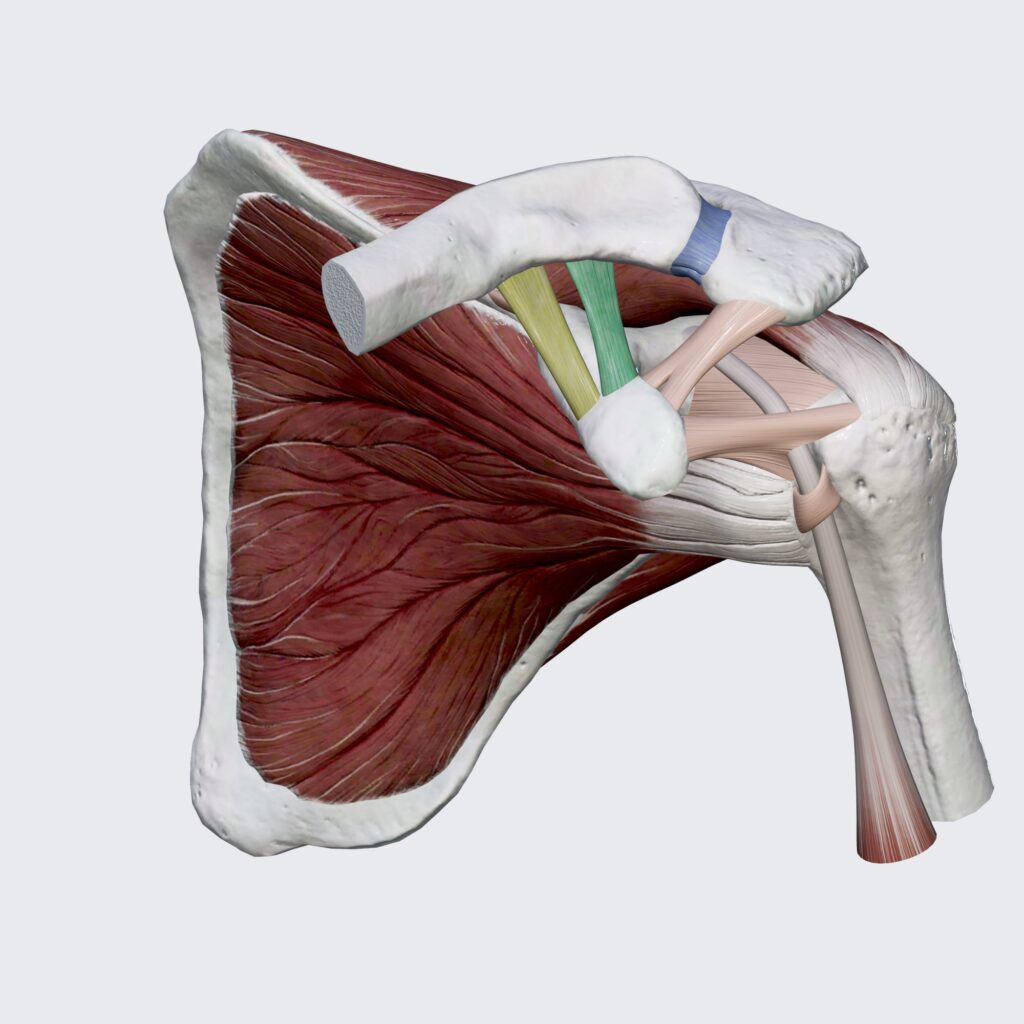
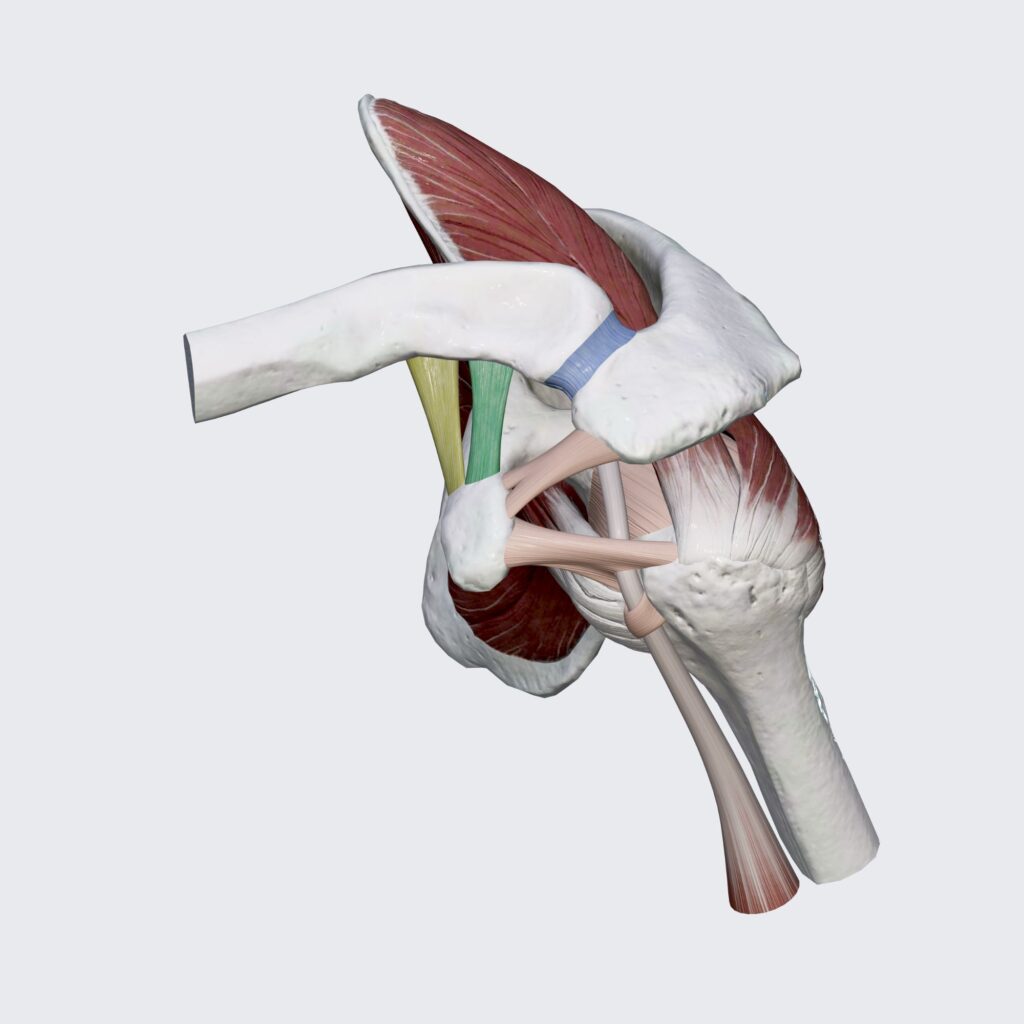
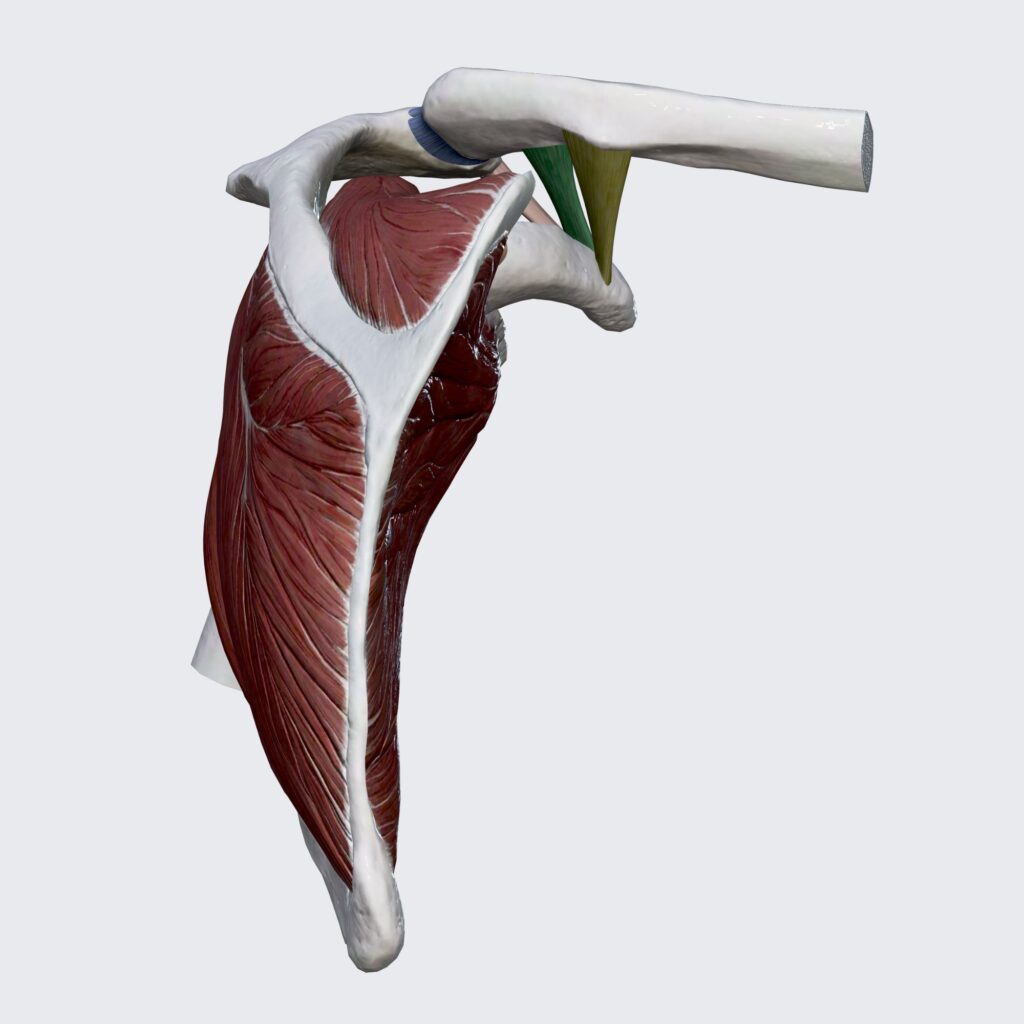
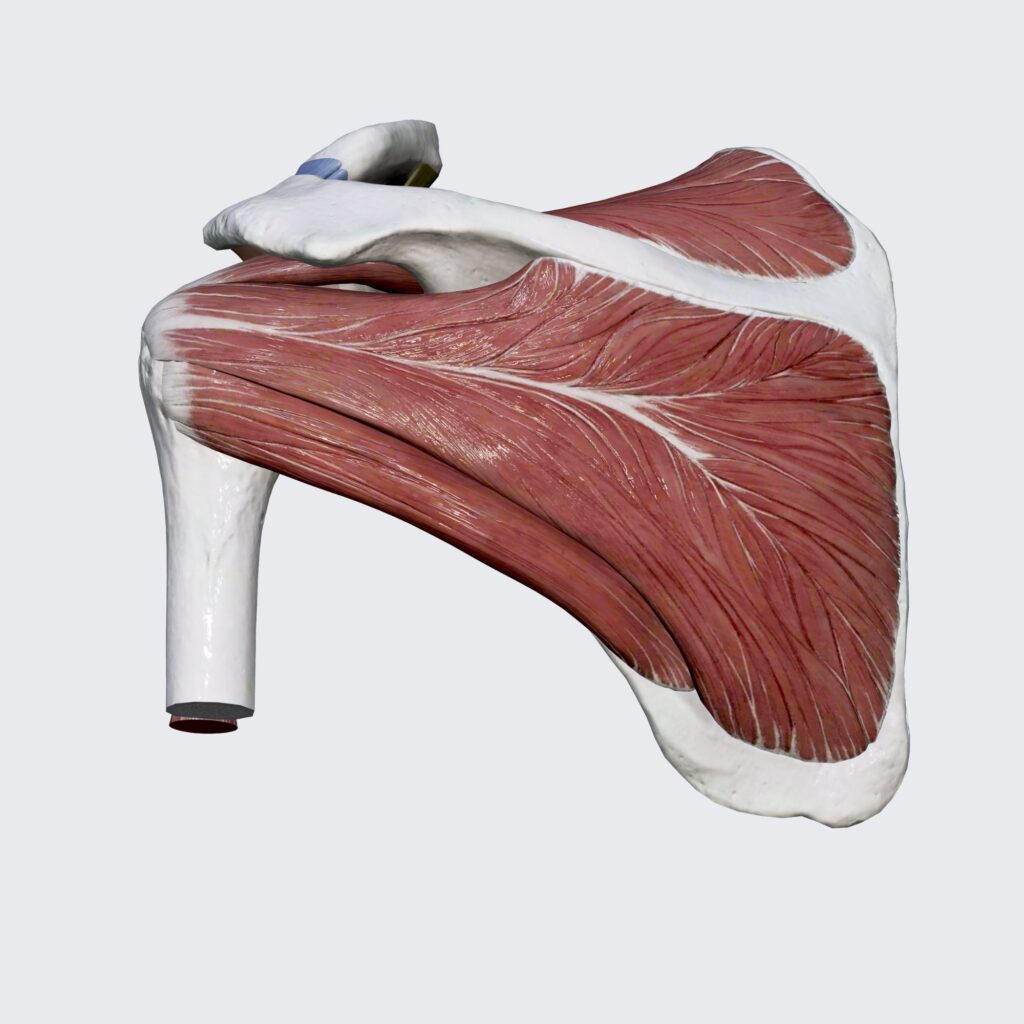
Views of the AC Joint from anatomy.app’s 3D image feature.
Assessing and Treating AC Joint Restrictions
As with any MAT routine, begin with A.R.T. Look for Asymmetry in the shoulder girdle, Restriction as the client moves the arm, and Tissue texture abnormalities that may suggest guarding or compensatory loading around the shoulder. These observations give us a starting point, but assessment continues during treatment.
As you move the shoulder into internal rotation, external rotation, or abduction, notice where you first encounter resistance or guarding. This resistance becomes your starting barrier. Apply the technique, then move through the same range again and determine if the joint is responding. Never force through a painful barrier. These techniques should remain comfortable and within the client’s available range. If you are uncertain that mobilization is appropriate, leave it out.
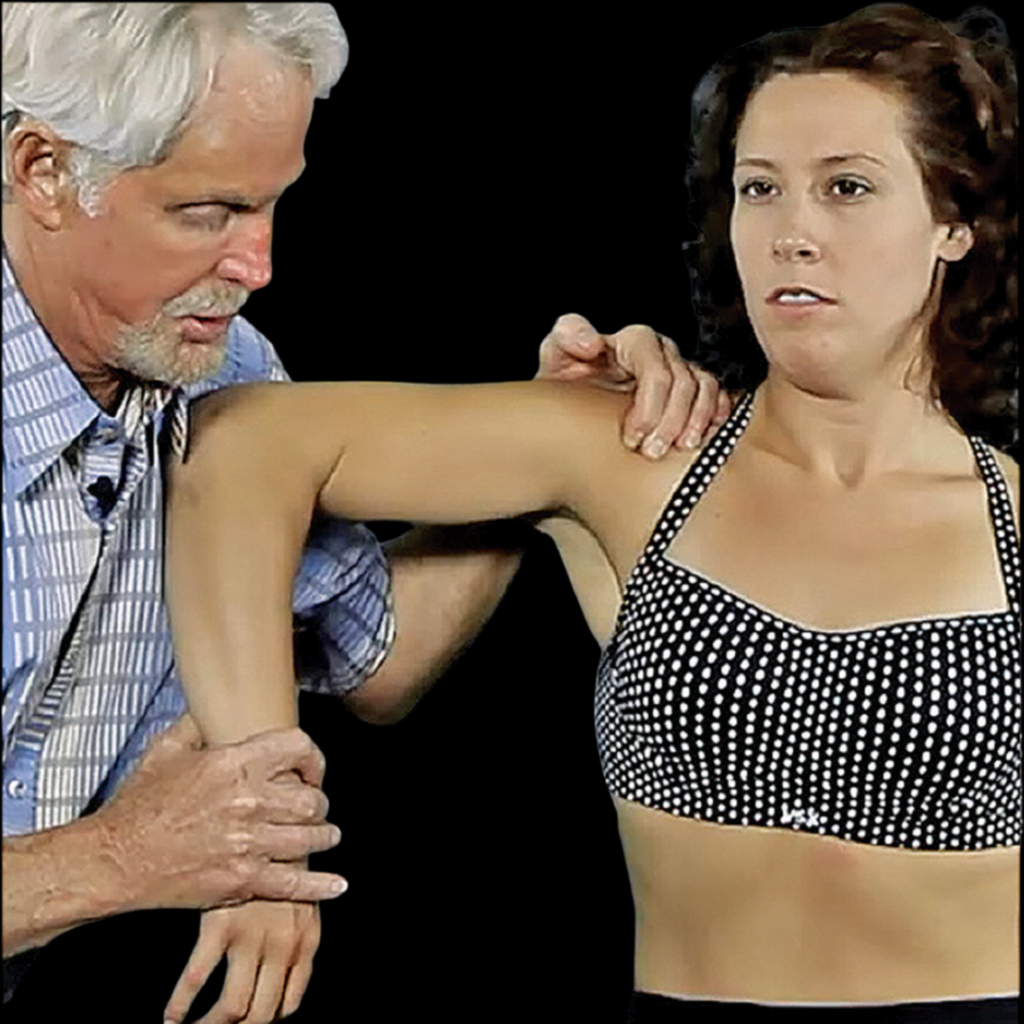
Internal Rotation Technique
With the client seated, position the shoulder at approximately 90 degrees of abduction and flex the elbow to 90 degrees. Place your left hand over the AC joint, with your fingers grasping just medial to the joint, while your left shoulder braces and supports the client’s elbow. With your right hand controlling the distal forearm, slowly bring the client’s arm downward into internal rotation until you meet the first comfortable resistance barrier. Ask the client to externally rotate by pressing the forearm upward against your resistance at approximately 20 percent effort. Hold for five seconds, then ask the client to relax. As they relax, slowly bring the arm farther into internal rotation until you meet the new barrier. Repeat the technique three to five times, keeping the movement slow and pain-free.
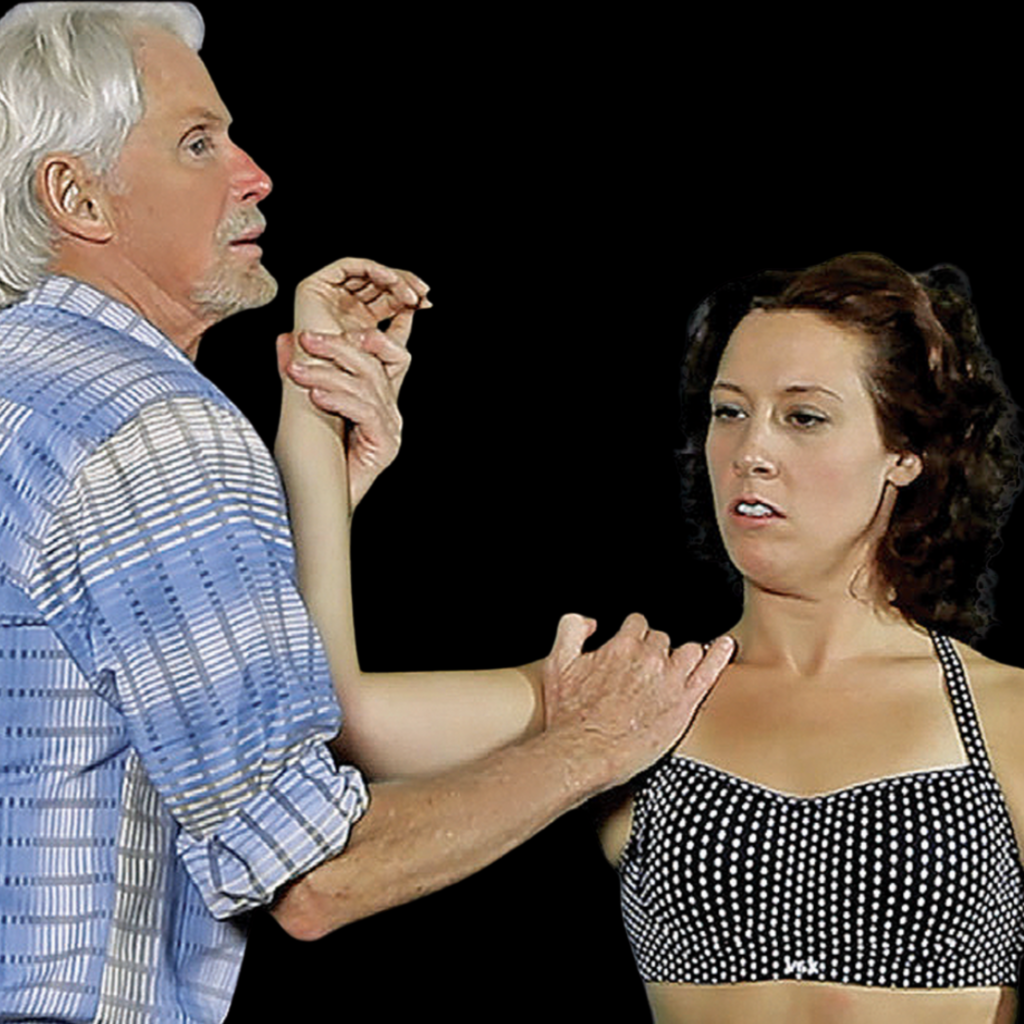
External Rotation Technique
With the client seated, position the shoulder at approximately 90 degrees of abduction and flex the elbow to 90 degrees. Place your right hand over the AC joint, with your fingers grasping just medial to the joint, while your right arm braces and supports the client’s elbow. With your left hand controlling the distal forearm, slowly bring the client’s arm upward into external rotation until you meet the first resistance barrier. Ask the client to internally rotate by pressing the forearm downward against your resistance at approximately 20 percent effort. Hold for five seconds, then ask the client to relax. As they relax, slowly bring the arm farther into external rotation until you meet the new barrier. Repeat the technique three to five times, keeping the movement slow and pain-free.
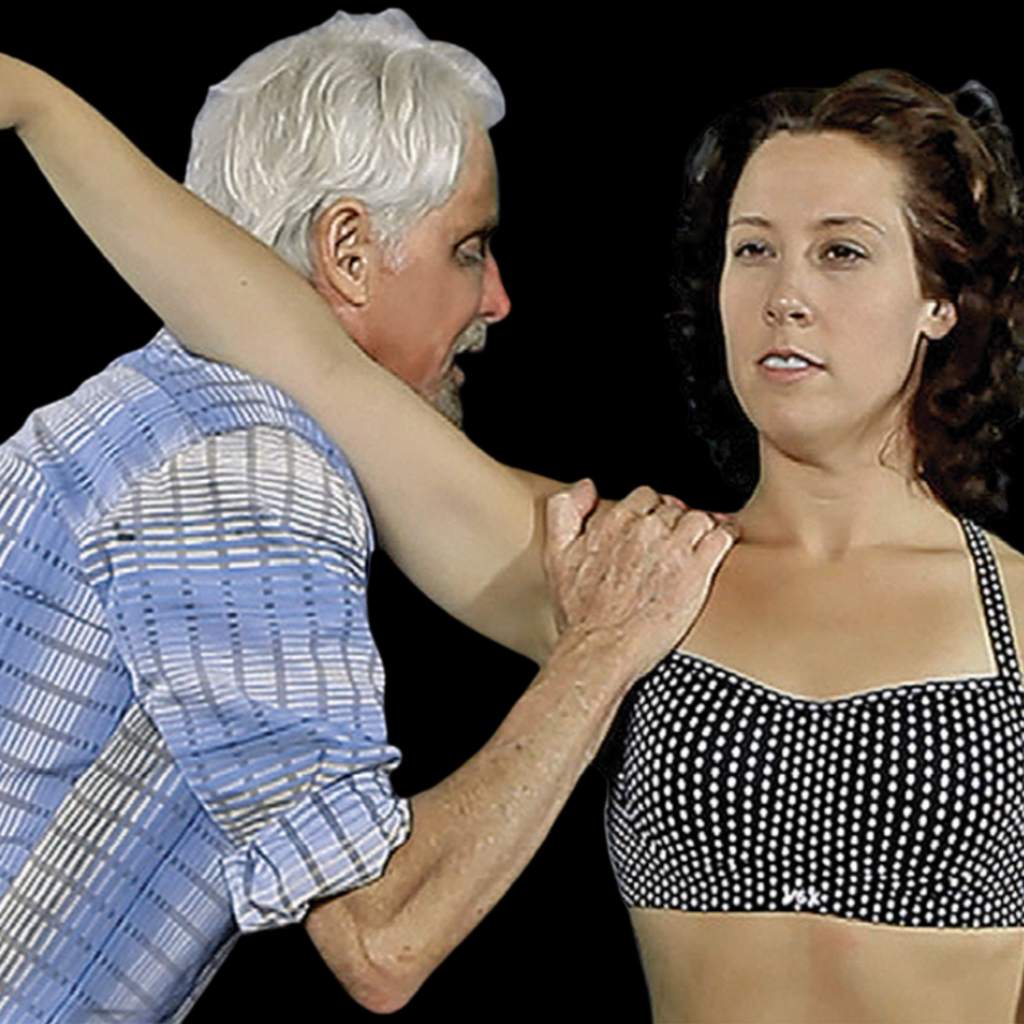
Arm Abduction Technique
With the client seated, rest their right arm over your left shoulder. Bend your knees and place both hands over the superior shoulder, with your fingers grasping just medial to the acromion. Maintaining this stabilizing contact, slowly straighten your legs so your shoulder elevates the client’s arm while your hands provide a gentle counterforce. Continue until you meet the first comfortable abduction resistance barrier. Ask the client to press their arm downward into your shoulder at approximately 20 percent effort. Hold for five seconds, then ask the client to relax. As they relax, slowly straighten your legs further to bring the arm into greater abduction until you meet the new barrier. Repeat the technique three to five times, keeping the movement slow and pain-free.
AC Joint Restrictions Rarely Exist in Isolation
A client with limited AC motion may also present with altered SC joint mechanics, thoracic rigidity, hypertonic pectoralis minor, reduced scapular posterior tilt, rotator cuff guarding, or limited glenohumeral motion. Treating only the painful spot misses the larger mechanical relationship. Search the blog for articles that discuss these conditions, or check out the Technique Tour home study course from which this material is drawn.