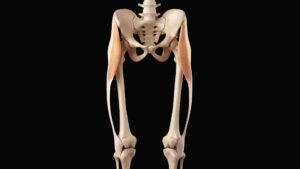
According to Herman Pontzer, Ph.D (Journal of Experimental Biology), fossil records show that 2 million yrs. ago, human leg length suddenly began to increase…presumably to conserve energy during long distance travel. Pontzer’s model predicts the rate of energy use related to limb length, i.e., longer legs = less force production = lower energy cost.
To test his theory, Pontzer placed people, dogs and goats on a treadmill and measured the amount of oxygen each used during running & walking at various speeds. “All things being equal, leg length is one of the major determinants of energy cost,” says Pontzer, “If two animals are identical except for leg length, the animal with longer legs is more efficient.”
Although his findings seem reasonable, my question is: “In humans, are legs really the propelling force or do we possess a more complex “whole-body” antigravty “spring system” that determines gait efficiency. See http://erikdalton.com/articleDontGetMarried_Part2.htm or some of Tom Myer’s articles at AnatomyTrains.com.