Introduction
The Femoroacetabular Distraction Technique combines traction with femoral rotation to temporarily unload the femoroacetabular joint while introducing varied mechanical and sensory input through the hip capsule.
By maintaining decompression as the femur moves through internal and external rotation, the practitioner reduces compressive loading while exposing the hip to safe, varied movement. This helps decrease protective guarding, improve movement tolerance, and prepare the hip for subsequent MAT techniques.
What Therapeutic Forces Are Applied?
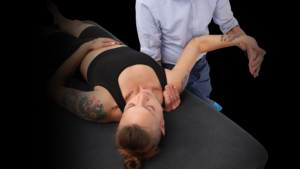
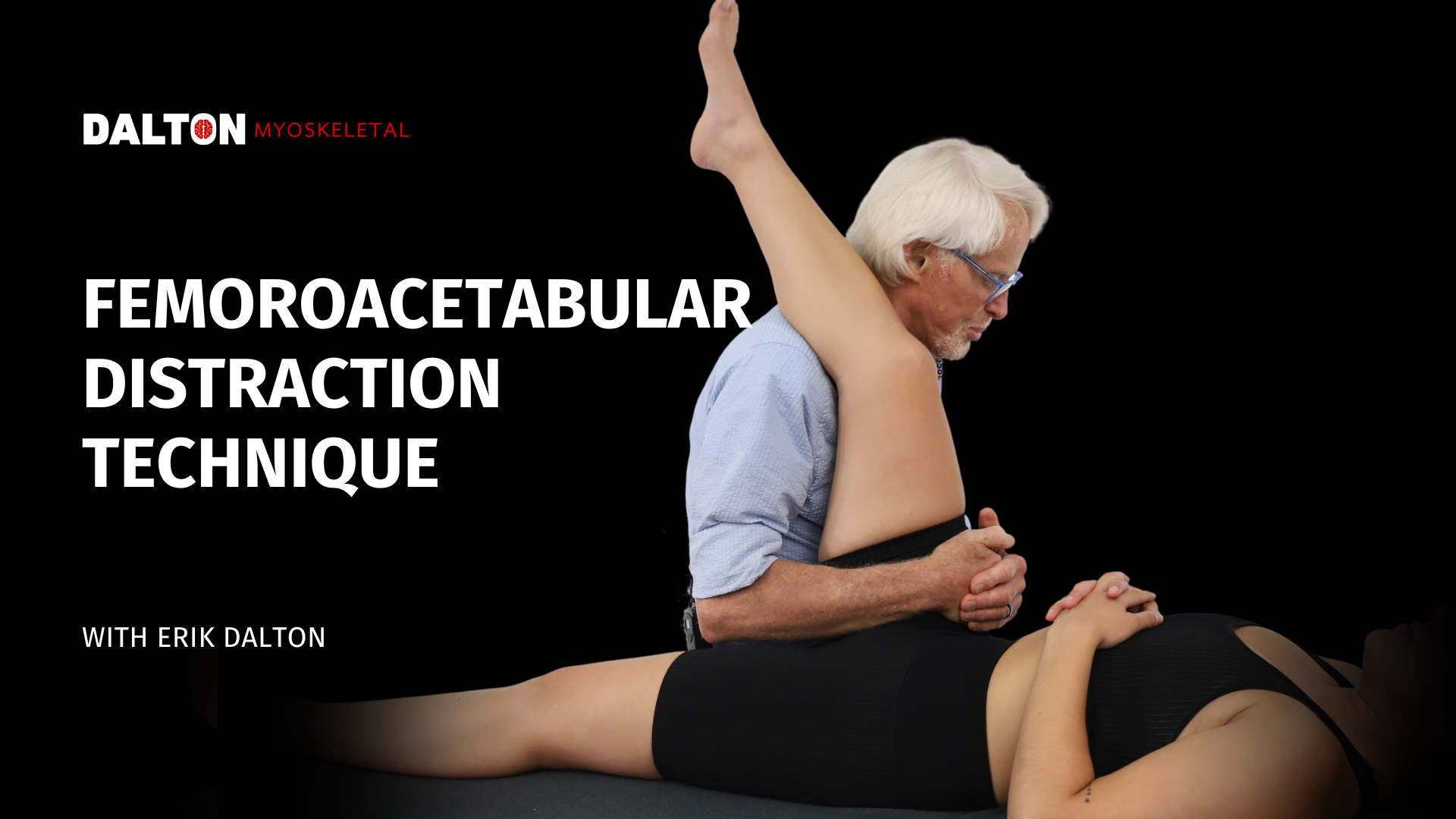
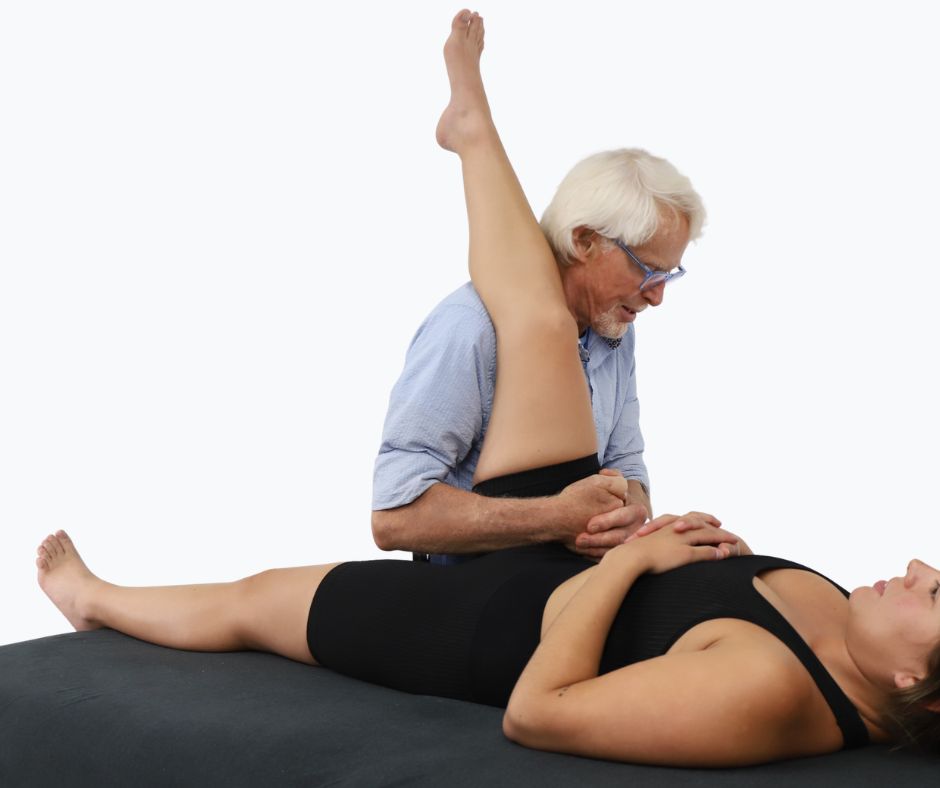
The primary force is distraction, or traction, through the long axis of the femur. With the client supine and the hip flexed, the practitioner positions the shoulder against the distal femur and uses the arms to secure the thigh. Rather than pulling primarily with the arms, the practitioner shifts the body backward. That body-weight shift draws the femoral head away from the acetabulum and temporarily reduces compression between the joint surfaces.
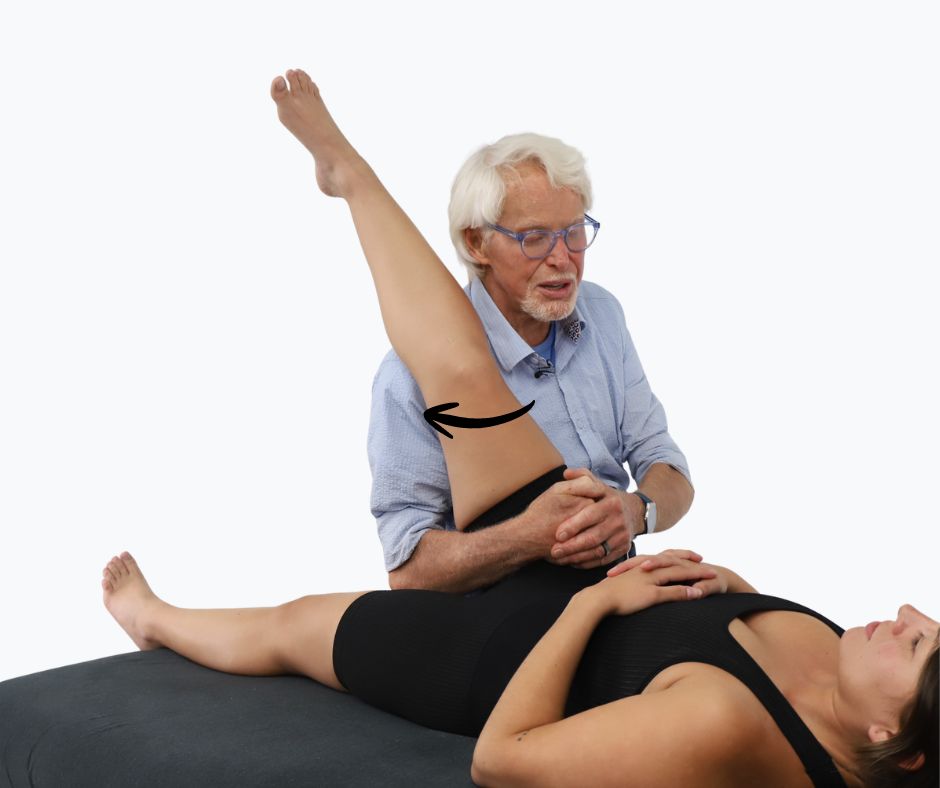
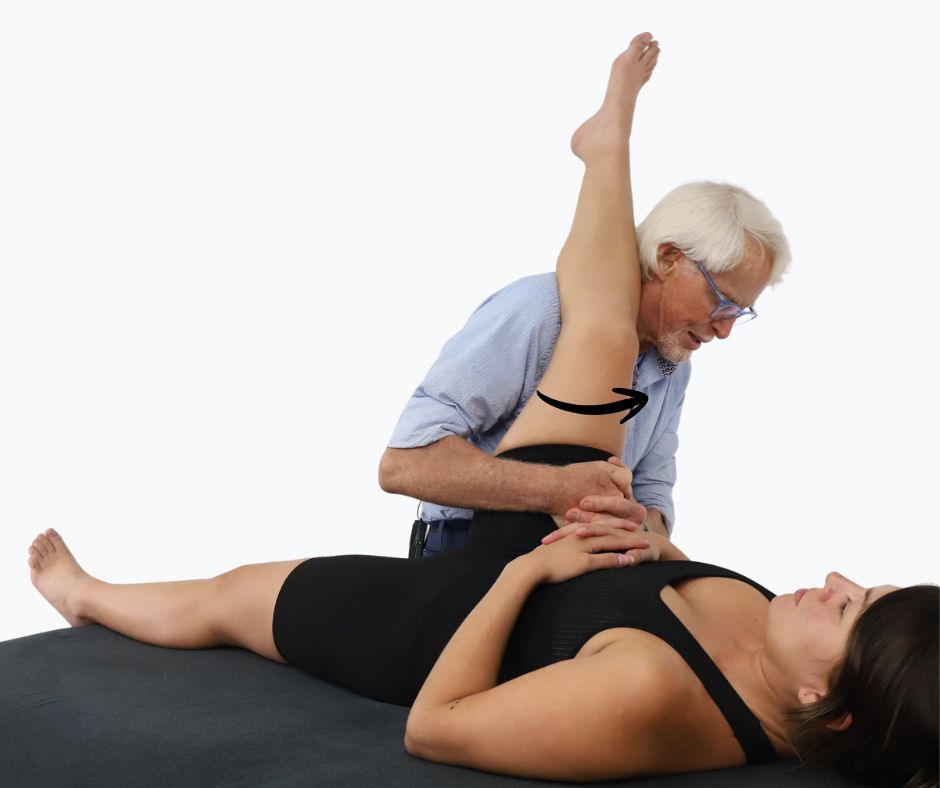
The technique then adds axial rotation of the femur while maintaining distraction. Internal rotation rotates the femoral head within the acetabulum in one direction, while external rotation reverses that torsional load. This changes which portions of the joint capsule are tensioned.
The final jostling introduces a small-amplitude oscillatory force. Rather than holding the joint in one position, the practitioner produces gentle multidirectional movement around the hip. This provides changing sensory input while allowing the client to remain passive.
Why is This Technique Useful?
Mechanically, distraction can temporarily reduce joint-surface compression and introduce joint play at the femoroacetabular articulation. Adding internal and external rotation distributes movement through different regions of the capsule rather than treating the hip as a simple hinge. That is particularly relevant because the hip must function in all three planes through flexion/extension, abduction/adduction, and internal/external rotation.
The technique also provides a graded stretch to the joint capsule and periarticular tissues as the femur is distracted and rotated. This exposes the capsule to varied, tolerable mechanical input to improve short-term movement tolerance.
Neurologically, the sustained distraction, changing rotation, and gentle oscillation create substantial proprioceptive and mechanoreceptive input. For a guarded hip, that novel but nonthreatening movement may help the nervous system reduce protective muscle activation. The client may subsequently experience less guarding, greater movement freedom, and improved tolerance for hip motion.
Technique Directions
The client lies supine on the right side of the massage table. You stand on the right side of the table at the client’s right hip.
The client’s left leg is relaxed on the massage table. Flex the right hip and support the client’s leg on your shoulder.
Secure the client’s femur by wrapping your arms around the proximal thigh and clasping your hands on the anterior surface of the thigh. Keep the client’s leg relaxed and allow your torso and shoulder to carry much of its weight.
Establish gentle distraction. Shift or drop your body weight backward rather than pulling forcefully with your arms. Allow that body-weight movement to create traction through the femur and a sense of unloading at the femoroacetabular joint.
Rock back and forth with your body weight in a steady, rhythmic cadence.
Add internal femoral rotation and rock back and forth, continuing the rhythmic cadence. Use your body position to produce the rotation rather than torquing the leg with your hands.
Add external femoral rotation and rock back and forth, continuing the rhythmic cadence. Use your body position to produce the rotation rather than torquing the leg with your hands.
Move between the rotational positions as tolerated. Explore internal and external rotation gradually while maintaining the distraction. Watch for guarding, resistance, or discomfort and reduce the force if the client begins to protect the movement.
Finish with gentle jostling. Allow the hip and leg to move through small, relaxed oscillations. The movement should feel loose and easy rather than forceful.
Repeat the technique on the opposite side.