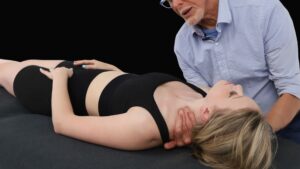
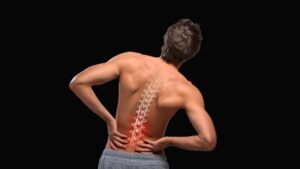
This article in the European Spine Journal supports the clinical conclusions I’ve written about concerning head forward postures, breathing, and neck pain: https://erikdalton.com/blog/upper-cross-controversy/

Cervical sagittal balance: A biomechanical perspective can help clinical practice
We believe patients with increased upper thoracic kyphosis and radicular symptoms may respond with increased forward head posture (FHP) as a compensatory mechanism to increase their lower cervical neural foraminal area and alleviate nerve root compression as well as reduce the burden on posterior muscles and soft and bony structures of the cervical spine. Increasing FHP (i.e., increased C2-C7 SVA) was associated with shortening of the cervical flexors and occipital extensors and lengthening of the cervical extensors and occipital flexors, which corresponds to C2-C7 flexion and C0-C2 extension.
The greatest shortening occurred in the suboccipital muscles, suggesting considerable load bearing of these muscles during chronic FHP. Regardless, there was no evidence of nerve compression within the suboccipital triangle. Finally, cervical sagittal imbalance may play a role in exacerbating adjacent segment pathomechanics after multilevel cervical fusion and should be considered during surgical planning.
Conclusions: The results of our biomechanical studies have improved our understanding of the impact of cervical sagittal malalignment on pathomechanics of the cervical spine. We believe this improved understanding will assist in clinical decision-making.
Reference: Patwardhan, Avinash G et al. “Cervical sagittal balance: a biomechanical perspective can help clinical practice.” European spine journal : official publication of the European Spine Society, the European Spinal Deformity Society, and the European Section of the Cervical Spine Research Society vol. 27,Suppl 1 (2018): 25-38. doi:10.1007/s00586-017-5367-1