What’s your take on the core stability controversy?

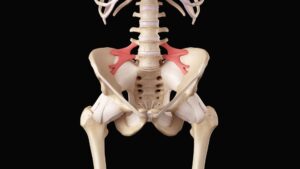
A primary goal of CS training is teaching clients how to recruit specific deep trunk muscles to effectively control lumbar spine positioning during dynamic movements. Core training is intended to provide essential joint stiffness and stability, allowing the body’s large prime movers (global muscles) a solid working foundation. Carolyn Richardson, describing her research on core stability states, “Thus, conceptually, the transversus abdominis and multifidus form the walls of a cylinder while the muscles of the pelvic floor and diaphragm form its base and lid, respectively. There is some initial evidence that these four muscles act in synergy to provide a spinal support mechanism.”

Since so many popular bodywork modalities are based on core stability principles such as co-contraction of transversus abdominis/pelvic floor muscles during specific movements, I’d like to get your feedback on this issue?

Special Savings this week only!

Save 25% off the "Myoskeletal Mobilization Massage Course" 


NEW! Enhanced video USB format

If you could learn one routine from Erik Dalton that you’d use every day, this would be it. The Myoskeletal Mobilization Massage course is a “greatest hits” collection of over 80 techniques designed to improve mobility, reduce pain, and keep your own body feeling strong. Follow along step-by-step through a full-body routine you can immediately bring into your practice. Whether you want to enhance relaxation sessions or integrate more clinical results, this course gives you both. Save 25% this week only.

Sale ends Sunday, April 19th.  Bonus: Purchase the home study course and receive the eLearning course for FREE!

Free subscription to the Technique Tuesday Newsletter

Receive an in-depth article like the one on this page along with a technique video every week in your inbox with no subscription fees.